
Qidu CNC Touch Probe Stylus
Qidu Probing offers a comprehensive selection of contact styluses in various diameters, lengths, tip materials, and configurations to suit different machining environments and inspection requirements. Whether you are setting workpiece origins, measuring complex contours, or performing in-process inspection, our styluses ensure consistent signal transmission and stable triggering performance.
Engineered with strict quality control standards, our contact styluses deliver outstanding dimensional accuracy, excellent wear resistance, and long service life. They are designed to work seamlessly with mainstream CNC touch probe systems, helping manufacturers maintain precise base positioning, optimize coordinate setup, and improve repeatability across production batches.
Why Choose Qidu CNC Touch Probe Stylus
Precision Engineering
Full customization capability
Fast Delivery
High cost-performance ratio
Three Steps to Select The Right Stylus
▪ Hard workpieces (steel/titanium) → Stainless steel or tungsten steel probe.
▪ Aluminum/cast iron → Silicon nitride/zirconia ball head, avoid ruby.
2.Based on accuracy requirements:
▪ The shorter the probe, the better; the larger the ball, the better; the fewer components, the better, to reduce bending and connection point errors.
3.Based on machine tool vibration:
▪ High vibration → Carbon fiber probe (excellent vibration damping).
Avoid using ceramic probes in high-vibration applications.
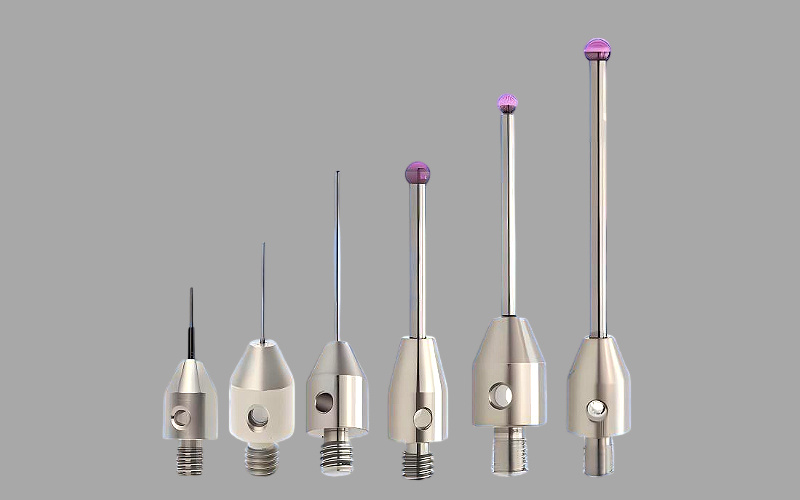
Browse by Catalog · Full Range of Stylus
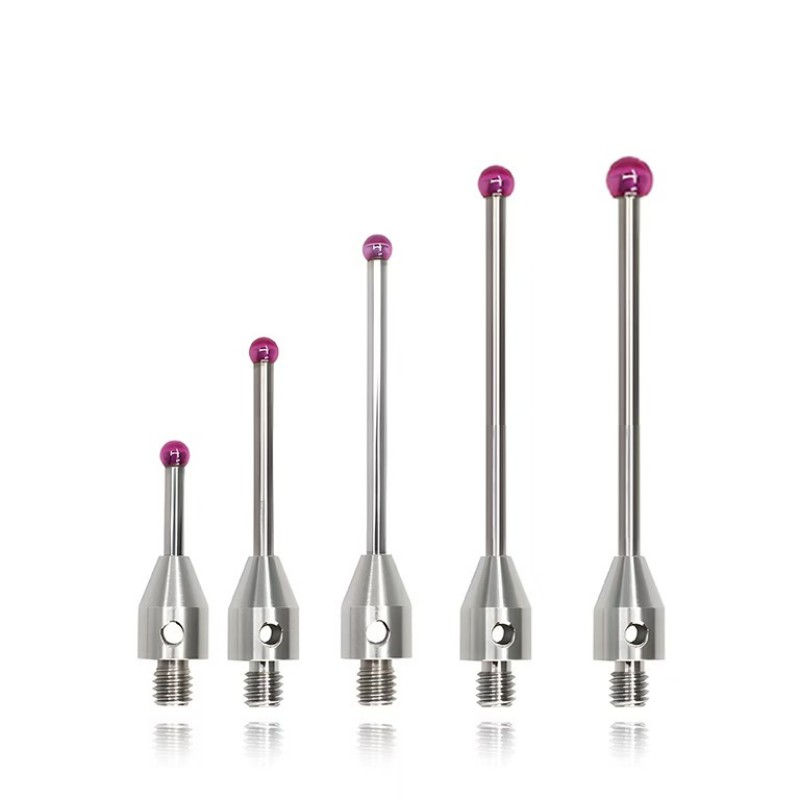
▪ Ball head: Ruby / Silicon nitride / Zirconia
▪ Probe: Tungsten carbide / Steel / Titanium alloy / Ceramic
▪ Tapered probe increases rigidity in deep holes.
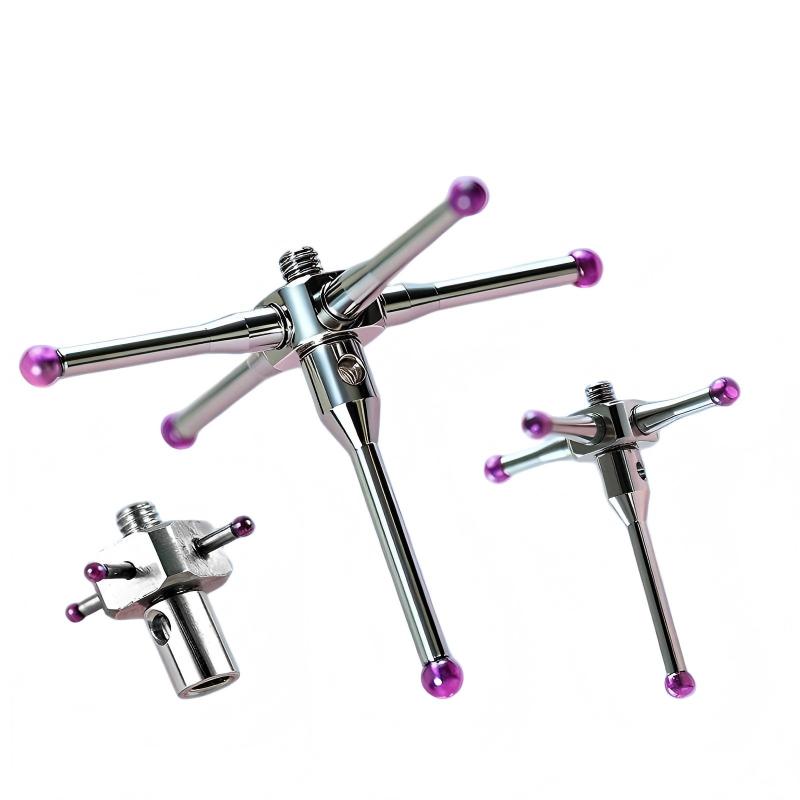
▪ Carbide tip / tungsten carbide rod
▪ Can detect the center of threaded holes
▪ Perfect for thin-walled parts
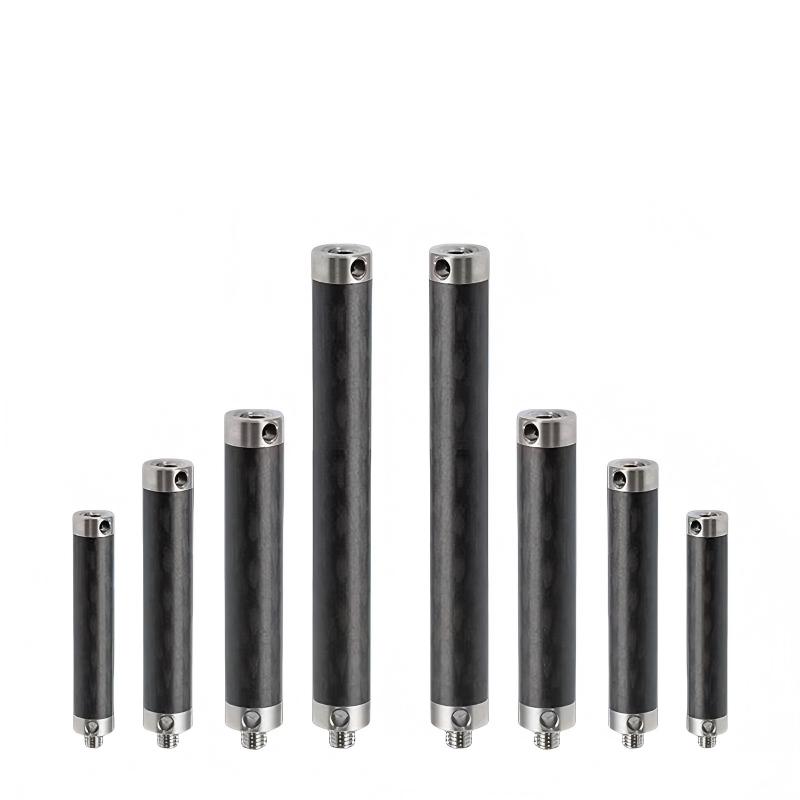
▪ Ceramic/carbon fiber materials ensure thermal stability and lightweight construction.
▪ Carbon fiber (only 20% the weight of tungsten carbide)
▪ Ceramic offers excellent thermal stability
Multiple lengths/customizable interfaces
A Guide to Stylus Materials Science
Measuring ball material
Probe material
Frequently Asked Questions
Probes are precision consumables. Replace immediately if any of the following occur: ① Worn or broken ruby ball: Scratches, dents, or chipped edges are visible to the naked eye or under a magnifying glass on the surface of the ruby ball; ② Bent probe: A significant shift in the position of the ruby ball is observed visually or when tested on a calibration ball; ③ Damaged threads: Installation feels awkward or loose; ④ Deteriorated measurement repeatability: Multiple measurements at the same point show fluctuations exceeding the expected range. It is recommended to calibrate the probe regularly (e.g., weekly) using a standard ball to monitor its condition.
Ruby (alumina) has a chemical affinity with aluminum. During measurement, the micro-friction generated by contact causes aluminum shavings to adhere to the surface of the ruby probe, forming “weld beads.” This changes the effective diameter of the probe, resulting in significant measurement errors. Therefore, silicon nitride or zirconium oxide probes should be used when measuring aluminum parts. These two materials have no affinity for aluminum, effectively avoiding adhesive wear.
The impact is significant. Doubling the probe length typically increases the effective triggering error of the probe several times over. The main effects are threefold: ① Deflection: The probe’s own weight and triggering force cause it to bend, with longer probes exhibiting greater bending; ② Vibration amplification: Increased length lowers the natural frequency of the probe system, making machine tool vibrations more likely to cause measurement noise; ③ Positional deviation: Small gaps at the probe joints are amplified by the length. It is recommended to choose the shortest, thickest probe with the fewest components possible, while still being able to contact the measured feature, to ensure the highest accuracy.