What Cause Tool Length Setter Collisions & How to Prevent

This article explores the potential causes of tool length setter collisions in CNC machines and how to avoid them.

The Nuts and Bolts of a 工具 Length Setter

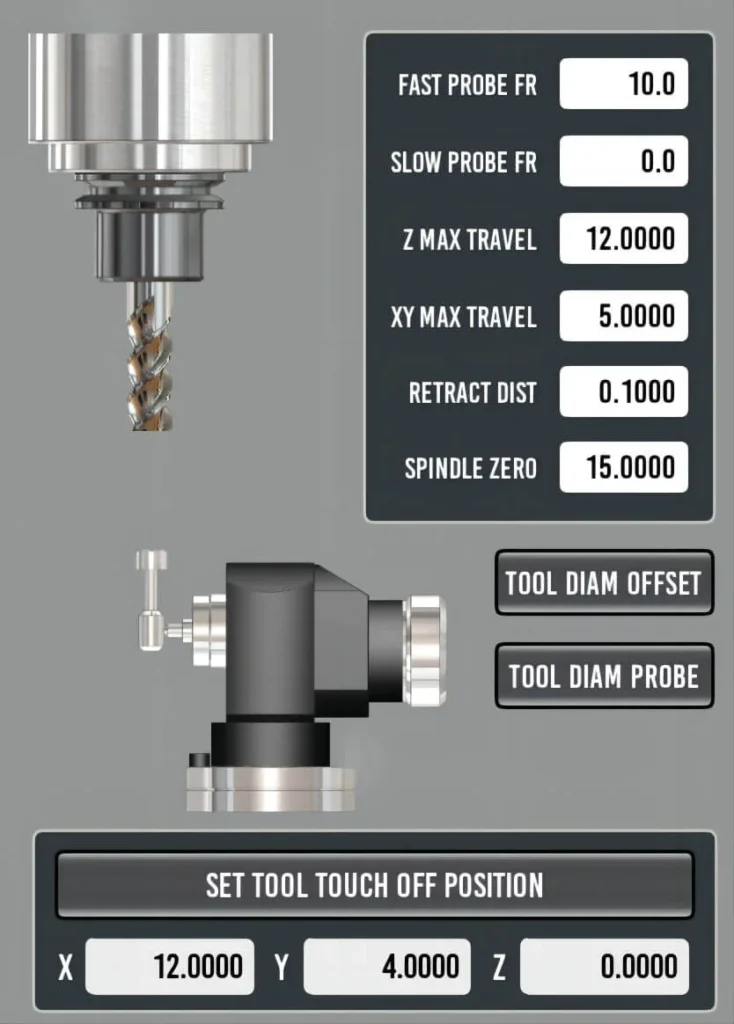
At the heart of a tool setter lies a highly accurate switch (probe). This probe utilizes a wear-resistant, pyramid-shaped tip made of cemented carbide to make contact with the tool. A flexible support rod transmits the contact force to the switch. The switch then sends a signal through a dedicated interface to the CNC system. This signal allows the system to identify the tool’s direction, calculate and adjust for any offsets, and ultimately achieve proper tool control.

For tools that spin, the tool setter not only measures and compensates for length variations but also for diameter variations (the difference between a tool’s two radii, divided by the axis offset value). This ensures the machine can create workpieces with the correct dimensions.

Preventing Tool 長さ Setter Collisions: A Watchful Eye is Key

Several factors can contribute to tool length setter collisions:

  1. Incorrect Tool Dimensions:Inaccurate input of the tool setter’s diameter and length can lead to collisions.
  2. Workpiece Miscalculations:Errors in entering the workpiece’s size and other relevant geometric data, along with improper initial positioning, can cause the tool length setter to strike the workpiece.
  3. Machine Coordinate System Issues:An incorrectly set machine tool coordinate system or a reset machine zero point during machining can increase the risk of collisions, especially during rapid tool movements.
  4. Tool Length Setter Malfunction:While less common, a malfunctioning tool length setter, such as a faulty switch or damaged probe tip, can provide inaccurate readings, leading to collisions.
  5. Coolant and Chip Interference:Build-up of coolant or metal chips around the tool setter can impede its proper movement and interfere with accurate readings. This can cause the CNC system to compensate incorrectly and potentially lead to a collision.
  6. To minimize the chance of collisions during program execution and tool changes, operators need to be especially vigilant during these initial stages. Incorrect program edits or inaccurate tool dimension input can lead to problems. Additionally, retracting the tool in the wrong order at the program’s end can also cause collisions.
Tool Length Setter
Tool Length Setter

The Role of the Operator in Collision Prevention

Here’s how operators can play a crucial role in preventing collisions:

  • Utilize all senses:While operating the machine tool, pay close attention to any unusual movements, sparks, noises, vibrations, or burning smells. These signs may indicate a potential issue.
  • Immediate action:If the machine tool’s working state seems abnormal, stop the program immediately to prevent further problems.

By understanding the workings of the tool length setter and the potential causes of collisions, operators can play a vital role in ensuring the safe and efficient operation of CNC machines.

どのような問い合わせでも、連絡する歓迎 奇数計測 チームまでお問い合わせください。.

Katrina
カトリーナ

製造業界で10年以上の経験を持つメカニカルセールスエンジニア。営業戦略の立案・実行、顧客との関係構築、取引のクロージングに長けている。CRMソフトウェア、リードジェネレーションツール、ソーシャルメディアなど、さまざまな営業・マーケティングツールに精通しています。営業目標や目的を達成するために、単独で、またチームの一員として働くことができる。継続的な改善と新しい営業手法の習得に熱心。.

返信を残す

メールアドレスが公開されることはありません。 が付いている欄は必須項目です

Qidu logo

会社概要

会社概要
製品紹介
サービス
お問い合わせ
ブログ

製品紹介

タッチプローブ
レーザー工具セッター
ツールセッター
ツールセッティングアーム