
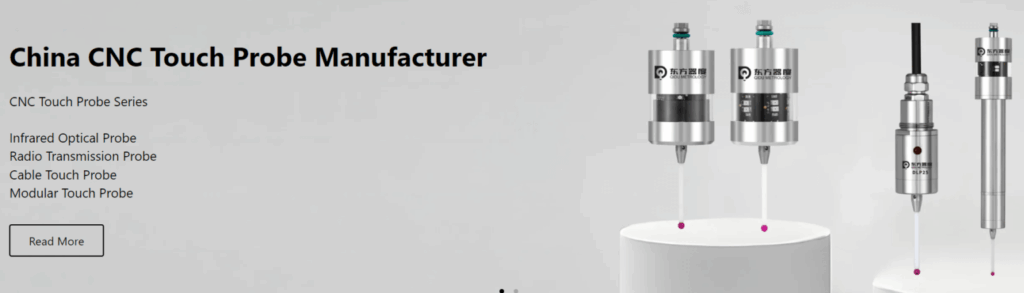
Machine touch probes encompass various types suitable for diverse machining tasks. They fall into two main categories: workpiece inspection probes and tool inspection probes, each serving distinct purposes. These probes transmit signals through hard-wired, inductive, optical, or radio frequency means. Commonly integrated into CNC lathes, machining centers, and CNC grinding machines, machine tool probes operate seamlessly within the machining cycle, eliminating the need for manual intervention. They directly assess tool or workpiece dimensions and positions, automatically rectifying any deviations in offsets based on measurement data. This capability empowers machines to produce components with heightened precision, rendering them a cost-efficient and preferred choice among enterprises.
Key Functions of Machine Touch Probes
Machine tool probes fulfill several crucial functions:
- Establishing workpiece coordinates, rectifying coordinate systems, and determining machining allowances for blanks.
- Verifying workpiece alignment, evaluating clamping accuracy, and detecting deformation caused by clamping.
- Measuring step heights, dimensions, diameters, hole distances, perpendicularity, positional tolerances, angles, etc.
- Assessing blade shapes, mold surface profiles, and intricate geometries.
- Identifying dimensional deviations post-measurement and facilitating tool compensation adjustments.
- Detecting the presence of workpieces.
In essence, machine tool probes act as supplemental measurement tools during machining processes. Integrated into machine tools, they enable real-time measurement and calibration, streamlining setup procedures while enhancing the efficiency and quality of machining operations. Welcome to contact with Qidu Metrology team if you need more detailed information.