
Ruby Ball Star Stylus Series
The core application of the ruby star-shaped stylus is to achieve efficient, multi-directional, high-precision measurements on a coordinate measuring machine (CMM). It uses a central body to simultaneously mount multiple ruby probe balls, primarily solving the measurement challenges of complex geometric features and significantly improving measurement efficiency.
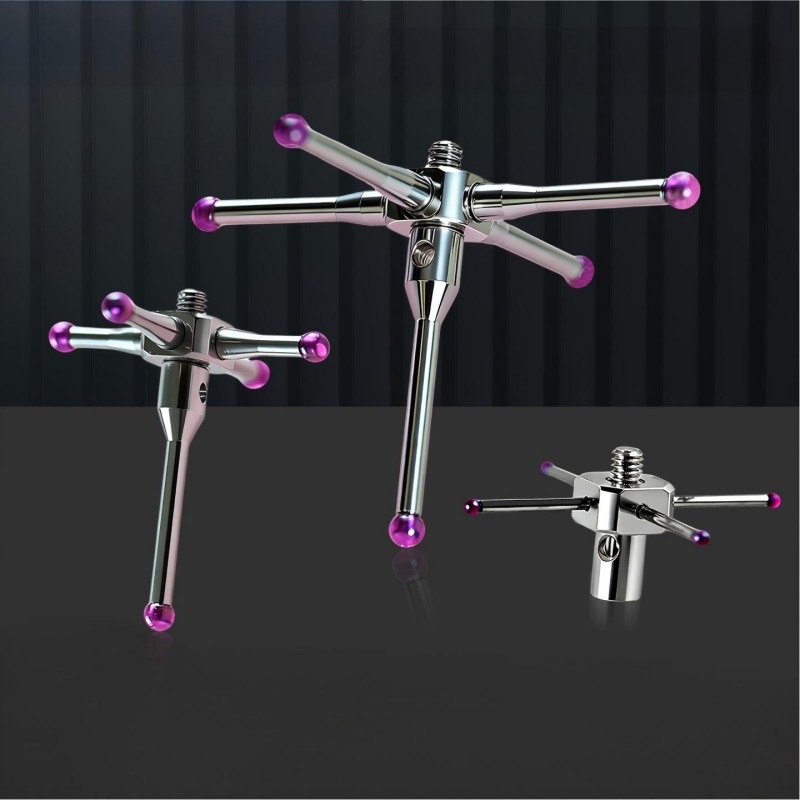
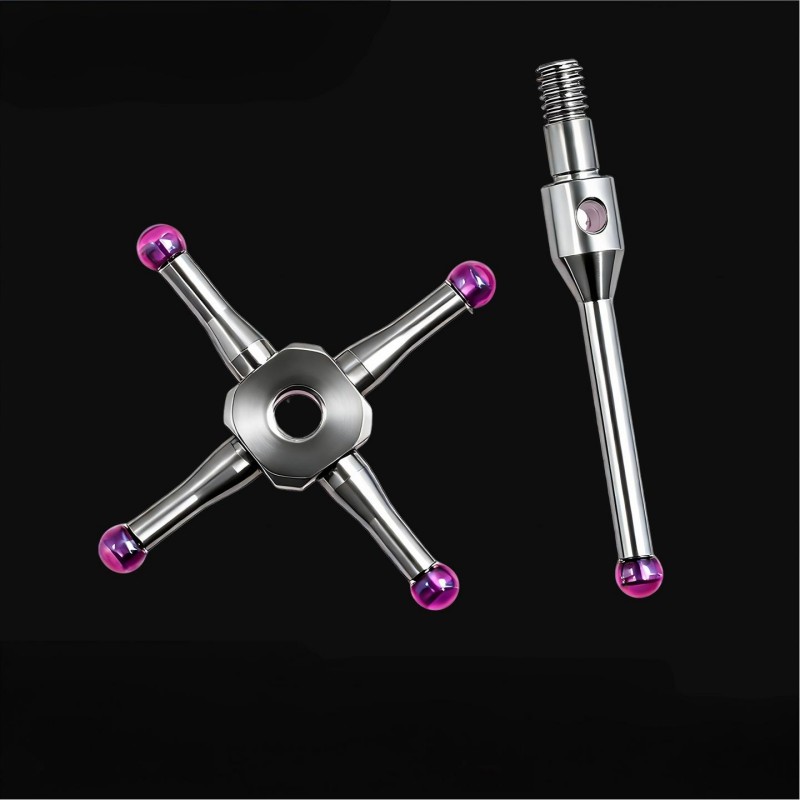
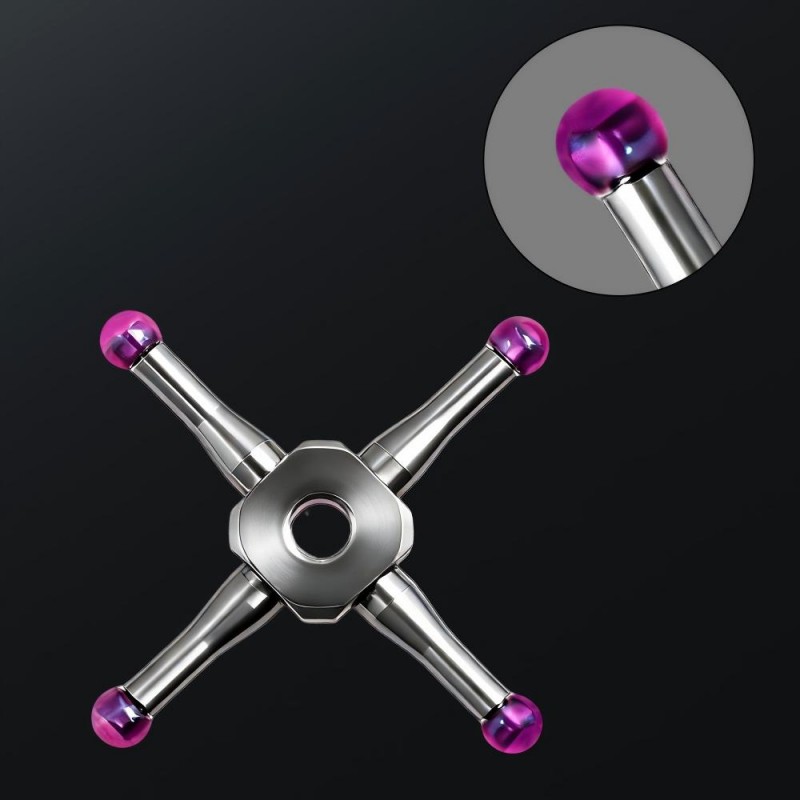
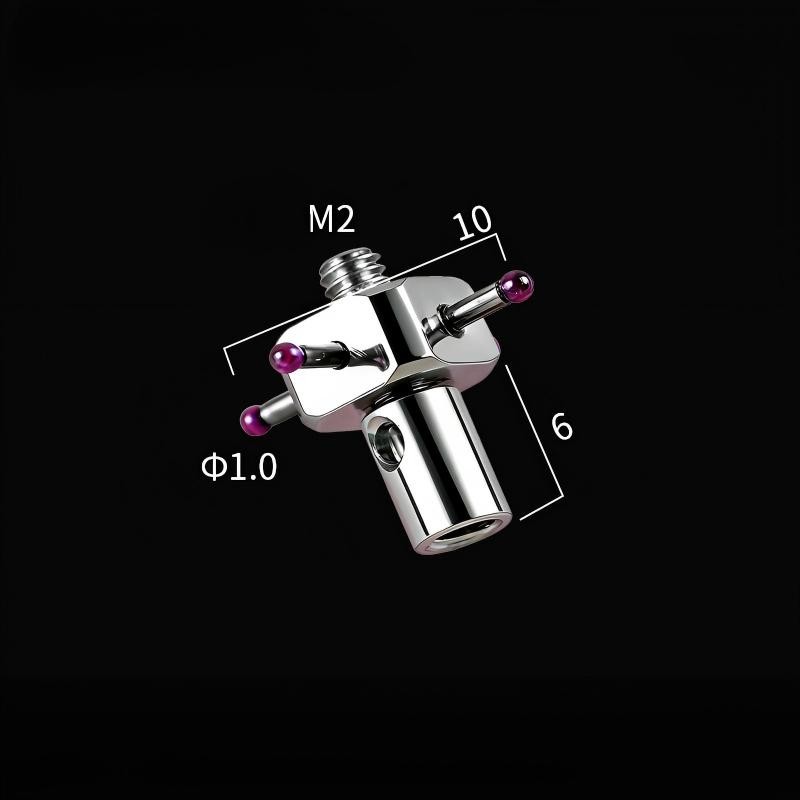
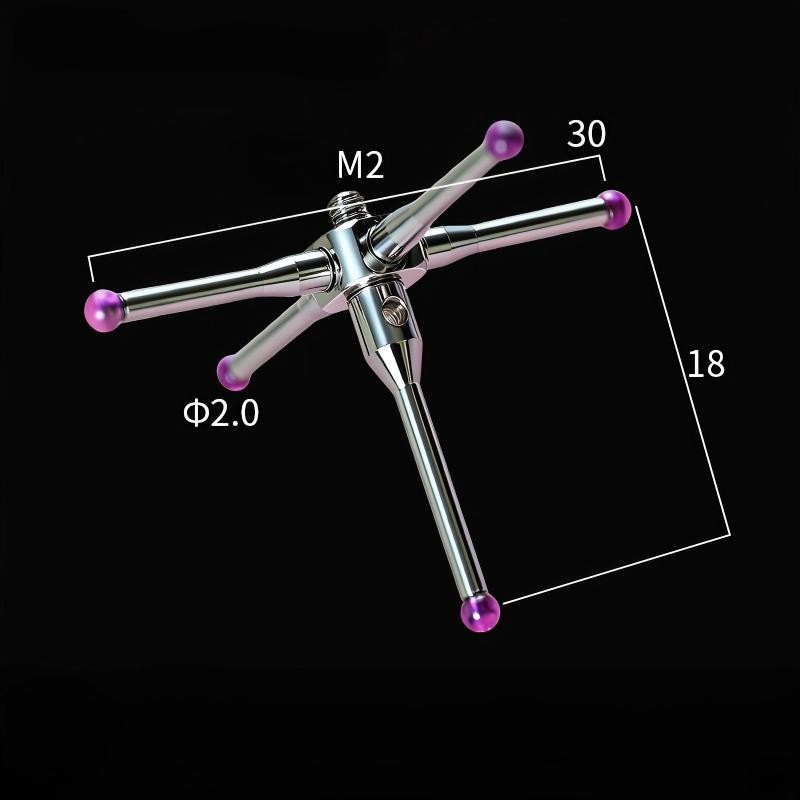
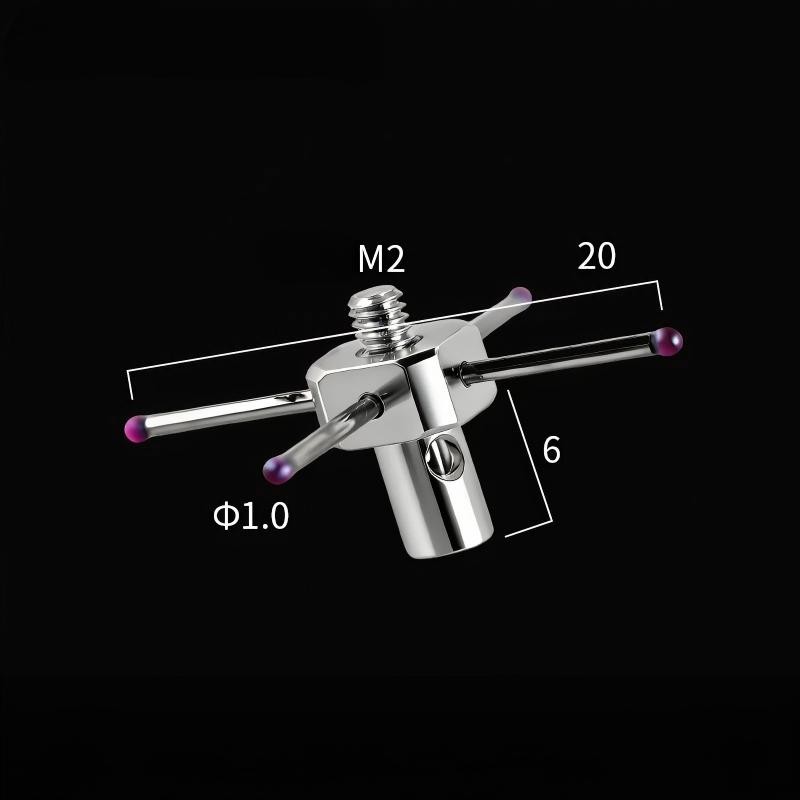
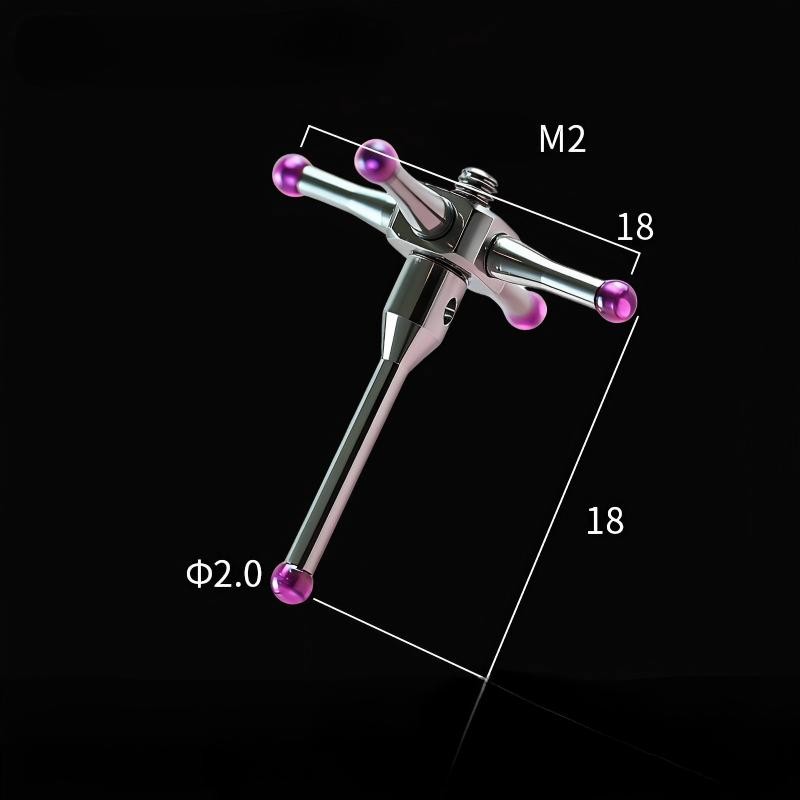
M2-M5 Ruby Ball Star Stylus
| Kugelkopf Material: | Rubinrot |
| Material der Sonde: | Wolframkarbid / Wolframstahl |
| Spezifikation des Gewindes: | M4 (metrisch) - Effektive Länge berechnet von der Kugelmitte |
| Gemeinsame wirksame Längen: | 10mm / 20mm / 30mm / 50mm (Nicht-Standard verfügbar) |
| Kugeldurchmesser: | φ1,0mm, φ2,0mm, φ3,0mm und anpassbar |
Gewindefamilie (M2~M5):
✲Gewinde Definition: Spiralförmige Vorsprünge auf einer zylindrischen Oberfläche. Diese Serie verwendet das metrische M2-M5, Standard M3/M4.
Core Applications and Advantages
1.High-Efficiency Measurement of Complex Features: The multiple tips of a star-shaped probe can contact different surfaces of a workpiece, such as the sides, bottom, grooves, and edges of holes, eliminating the need for frequent probe changes or angle adjustments compared to straight probes. This is particularly suitable for measuring workpieces with complex shapes.
2.Significantly Reduced Inspection Time: By reducing probe movement and replacements, star-shaped probes significantly speed up the entire measurement process and improve work efficiency.
3.Deep Measurement of Internal Features: For internal structures such as holes and grooves, the multiple tips of a star-shaped probe can easily reach deep areas and sidewalls without extending the probe to its limit, effectively avoiding the risk of probe collision with the workpiece.
4.Enhanced Measurement Flexibility: You can configure up to five probes on the probe center seat to create a customized star-shaped probe to suit specific measurement tasks.
2.Significantly Reduced Inspection Time: By reducing probe movement and replacements, star-shaped probes significantly speed up the entire measurement process and improve work efficiency.
3.Deep Measurement of Internal Features: For internal structures such as holes and grooves, the multiple tips of a star-shaped probe can easily reach deep areas and sidewalls without extending the probe to its limit, effectively avoiding the risk of probe collision with the workpiece.
4.Enhanced Measurement Flexibility: You can configure up to five probes on the probe center seat to create a customized star-shaped probe to suit specific measurement tasks.
Regarding the “Ruby” Material
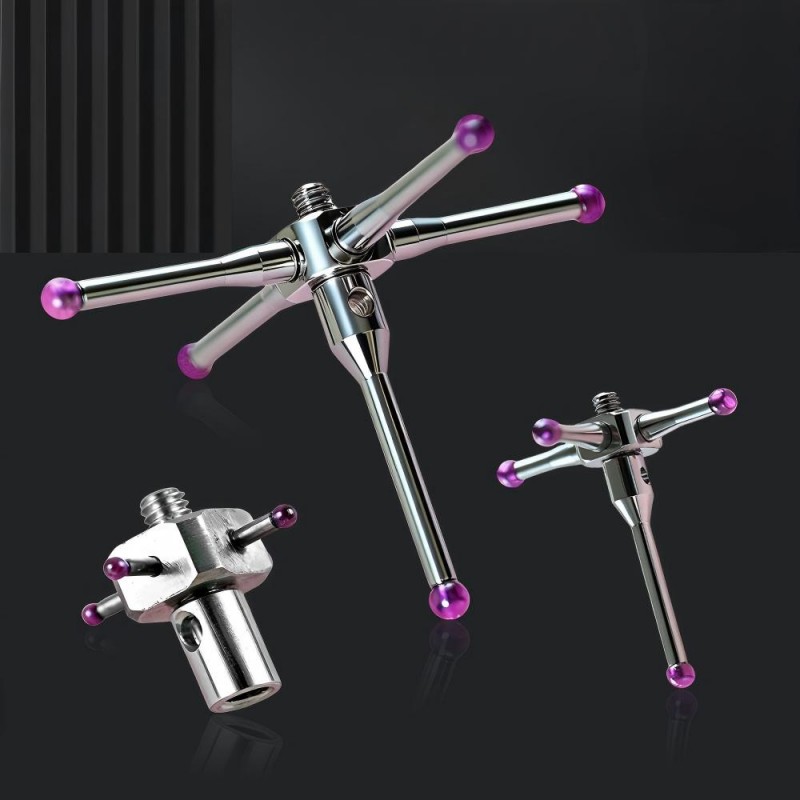
Why Ruby? Synthetic ruby is one of the hardest known materials, with an extremely smooth surface and exceptionally high compressive strength and wear resistance. For most measurement scenarios (such as steel, copper, and plastics), it is the ideal standard material, ensuring long-term accuracy and stability.
Exceptions to Note:
▪ Caution should be exercised when measuring aluminum: Ruby has an affinity for aluminum. Scanning on high-intensity aluminum surfaces may cause “adhesive wear,” resulting in tiny aluminum shavings adhering to the ruby ball and affecting measurement accuracy. In this case, a silicon nitride probe ball is recommended.
▪ Caution should also be exercised when measuring cast iron: High-intensity scanning on cast iron may cause “friction wear” on the ruby surface. In this case, a zirconia probe ball should be considered.
Usage Limitations: It is important to note that due to the structural rigidity of the star-shaped probe and the complexity of the machine tool working environment, it is generally not recommended to use star-shaped probes for in-machine measurements.
Hopefully, this information helps you better understand the applications of ruby star-shaped probes. If you encounter specific measurement challenges in practical applications, such as designing a measurement solution for a particular workpiece, feel free to ask me anytime.
Exceptions to Note:
▪ Caution should be exercised when measuring aluminum: Ruby has an affinity for aluminum. Scanning on high-intensity aluminum surfaces may cause “adhesive wear,” resulting in tiny aluminum shavings adhering to the ruby ball and affecting measurement accuracy. In this case, a silicon nitride probe ball is recommended.
▪ Caution should also be exercised when measuring cast iron: High-intensity scanning on cast iron may cause “friction wear” on the ruby surface. In this case, a zirconia probe ball should be considered.
Usage Limitations: It is important to note that due to the structural rigidity of the star-shaped probe and the complexity of the machine tool working environment, it is generally not recommended to use star-shaped probes for in-machine measurements.
Hopefully, this information helps you better understand the applications of ruby star-shaped probes. If you encounter specific measurement challenges in practical applications, such as designing a measurement solution for a particular workpiece, feel free to ask me anytime.