
Table of Contents
Introduction
If you’ve ever struggled with inconsistent measurement results, there’s a good chance the problem wasn’t your machine—it was your stylus.
In many workshops and quality labs, people invest heavily in high-end CMMs or probing systems, but treat the probe stylus as a standard accessory. In reality, the stylus is the only part that actually touches the workpiece. That tiny contact point decides whether your data is reliable—or misleading.
Choosing the right probe stylus is not about picking something “that works.” It’s about matching the stylus to your real application: your parts, your tolerances, your speed, and your environment. Especially in high-frequency measurement, where repeatability matters more than anything, the wrong stylus can quietly cost you accuracy, time, and money.
Let’s break it down in a practical way.
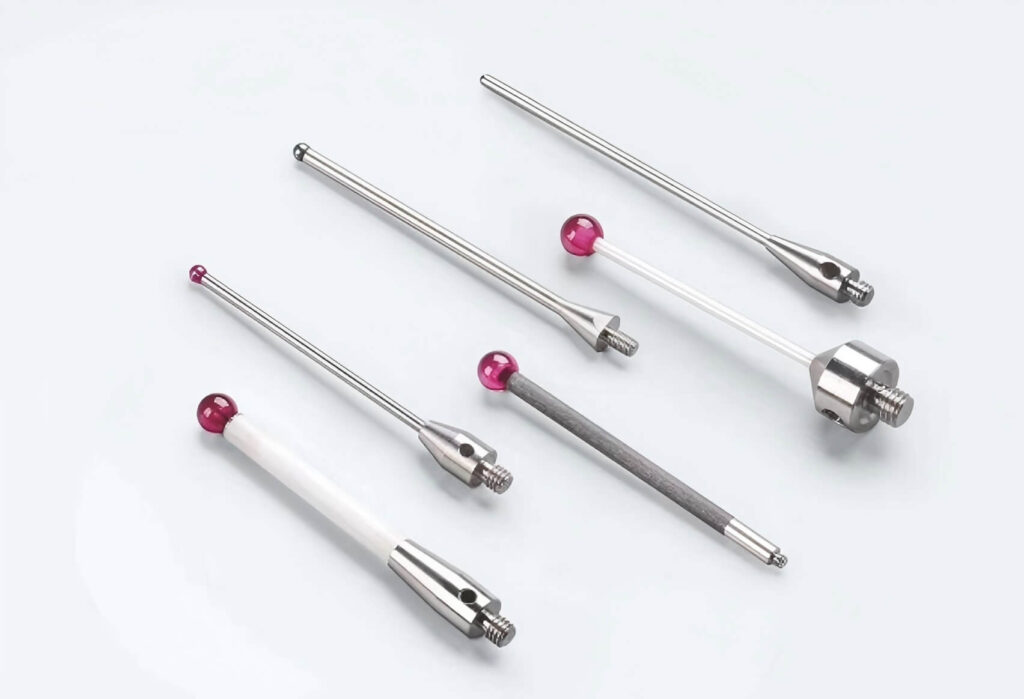
Understanding the Role of a Probe Stylus in High-Frequency Precision
What Is a Probe Stylus?
A probe stylus is the physical interface between your machine and your part. It’s usually a stem with a precision ball tip that contacts the surface during measurement.
Simple in structure—but critical in function.
Every measurement point your system records comes through that stylus. If it bends slightly, wears unevenly, or doesn’t suit the geometry you’re measuring, the error gets built into your data. And the worst part? You often don’t notice it immediately.
In high-frequency applications, this becomes even more sensitive. When the probe is triggering thousands of times in a short cycle, even small inconsistencies get amplified.
How a Probe Stylus Impacts Measurement Results
Think of the stylus like a pen. If the tip is stable and well-shaped, your lines are clean. If it’s worn or flexible, everything becomes messy.
The same logic applies here.
- A long, thin stylus can flex under contact force
- A large ball may miss fine features
- A poor material may wear faster than expected
At high speeds, these issues don’t just appear—they multiply. You start seeing variation between cycles, unexplained deviations, or unstable repeatability.
And many times, people blame the machine before checking the stylus.
Key Factors to Consider When Choosing a High-Frequency Compatible Probe Stylus
Material Matters: Selecting the Right Build for Your Probe Stylus
Not all stylus materials behave the same in real production environments.
- Ruby is the industry standard for a reason. It’s hard, smooth, and works well for most applications.
- Silicon nitride is lighter and better suited for high-speed probing or softer materials.
- Ceramic offers good stiffness and performs well when temperature stability matters.
But here’s the practical takeaway: don’t choose material based on theory—choose it based on your parts.
If you’re measuring aluminum at high frequency, wear behavior matters. If you’re working in a temperature-controlled lab, thermal stability becomes less critical. Always connect the material to the real working condition.
Size and Shape: Finding the Perfect Fit for High-Frequency Probing
This is where many mistakes happen.
A smaller ball tip helps you reach tight features—but it’s more fragile. A longer stylus helps you access deep cavities—but increases deflection risk.
There is no “best” size. Only the right balance.
- Use shorter and stiffer styluses whenever possible
- Only go longer when access requires it
- Choose ball diameter based on feature size, not convenience
For high-frequency probing, stiffness is your best friend. The more stable the stylus, the more reliable your repeatability.
Compatibility with Your Probing System for High-Frequency Accuracy
This sounds obvious, but it’s often overlooked.
Not every stylus performs the same across different probe systems. Thread size may match, but performance doesn’t always.
Pay attention to:
- Mounting interface
- Probe type
- Recommended stylus configurations from the manufacturer
A mismatch won’t always cause immediate failure—but it can reduce sensitivity, affect triggering behavior, or limit speed.
In high-frequency measurement, those small inefficiencies show up fast.
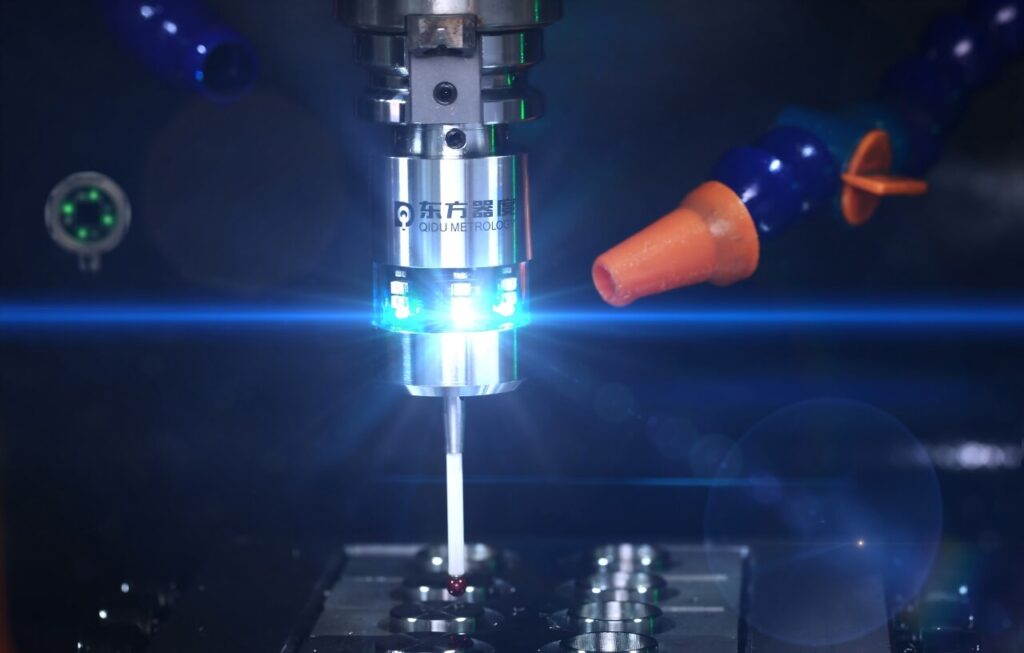
Environmental Considerations for High-Frequency Probe Stylus Performance
Real-world environments are not perfect.
Temperature changes, dust, coolant mist, even vibration from nearby machines—all of these can influence stylus performance.
At low measurement frequency, you might not notice. At high frequency, you will.
For example:
- Temperature shifts can slightly change dimensions
- Dust or oil can affect contact quality
- Vibration can introduce noise into readings
You don’t need a perfect lab—but you do need awareness. The more stable your environment, the more consistent your results.
Types of Probe Styluses for High-Frequency Applications
Standard Probe Styluses for General High-Frequency Use
Standard styluses are fine for most day-to-day tasks.
They’re cost-effective, easy to replace, and widely available. If your parts are simple and tolerances are not extreme, they will do the job.
But once your measurement becomes more demanding, their limitations start to show.
Specialized Probe Styluses for Advanced High-Frequency Precision
When parts get complex, standard styluses struggle.
This is where specialized designs come in:
- Extended styluses for deep features
- Disc or cylinder tips for specific geometries
- Lightweight designs for high-speed probing
These are not “nice to have”—they’re necessary in certain applications. If you’re forcing a standard stylus to do a specialized job, you’re already losing accuracy.
Custom Probe Styluses for Unique High-Frequency Needs
In many real production environments, standard options simply don’t fit.
Custom styluses are built for:
- Unique part geometries
- Multi-angle access
- Tight or obstructed measurement paths
Yes, they cost more. But if they reduce setup time, improve repeatability, and eliminate measurement errors, they pay for themselves quickly. Contact Qidu Metrology if you need customization.
Common Mistakes to Avoid When Selecting a High-Frequency Probe Stylus
Ignoring Application-Specific Needs in High-Frequency Probing
The biggest mistake is choosing based on habit.
Just because a stylus worked before doesn’t mean it works now. New part, new setup, new requirement—your stylus choice should change accordingly.
Overlooking Maintenance for High-Frequency Probe Stylus Longevity
Styluses don’t fail suddenly. They degrade slowly.
A worn ball tip, a slightly bent stem, or a bit of contamination—these small issues add up.
Regular inspection and cleaning are not optional, especially in high-frequency use.
Compromising on Quality for Cost in High-Frequency Stylus Selection
Cheap styluses look attractive—until they start causing problems.
Inconsistent ball quality, poor bonding, weak materials… these are not visible in the beginning. But they show up in your measurement data.
And by then, the cost is already higher than what you saved.
Tips for Maximizing High-Frequency Performance with Your Probe Stylus
Regular Calibration for High-Frequency Precision
If you rely on your data, you need to trust your calibration.
High-frequency probing increases wear and stress on the stylus. Regular calibration ensures that your system still reflects reality—not assumptions.
Proper Storage and Handling of Your High-Frequency Probe Stylus
Most stylus damage doesn’t happen during measurement—it happens during handling.
Dropping it, over-tightening it, or storing it loosely in a drawer… these are common and avoidable mistakes.
Treat it like a precision tool, not a spare part.
Upgrading Your Probe Stylus for Evolving High-Frequency Needs
Production evolves. Your stylus setup should too.
If you’re pushing for faster cycles, tighter tolerances, or more complex parts, your current stylus might be the limiting factor.
Upgrading isn’t always about buying something new—it’s about removing a bottleneck you didn’t realize was there.
Conclusion
A probe stylus may look like a small component, but it carries a big responsibility. It’s the point where your machine meets reality.
If you choose it carefully—based on your actual application, not assumptions—you’ll get stable, repeatable, and trustworthy measurements. If you don’t, even the best equipment won’t save you from bad data.
In high-frequency measurement, consistency is everything. And consistency starts with the stylus.
Take the time to get it right.
Frequently Asked Questions (FAQs)
What is a probe stylus, and why is it important for high-frequency measurements?
It’s the contact tip that touches the part during measurement. It directly affects accuracy, especially when measurements are repeated quickly and frequently.
How does the material of a probe stylus affect high-frequency probing accuracy?
Different materials handle wear, weight, and stability differently. The right material helps maintain consistent results over repeated measurements.
What size and shape of probe stylus should I choose for high-frequency applications?
Choose based on your part geometry. Smaller tips for tight features, shorter and stiffer designs for better stability.
How often should I calibrate my probe stylus for high-frequency performance?
More frequently than you think. The higher the usage, the more often you should check calibration.
Can I use a standard probe stylus for specialized high-frequency tasks?
Sometimes, but not always. For complex parts, a specialized stylus is usually the better choice.
What are the signs that I need to replace my high-frequency probe stylus?
Inconsistent results, visible wear, reduced repeatability, or unexplained measurement errors.
How do environmental factors impact the performance of a high-frequency probe stylus?
Temperature, dust, and vibration can all affect measurement stability, especially when working at high speed.
