
Table of Contents
Introduction
Walk into a modern shop and you will notice how much of the operation depends on signals moving quietly in the background. Inventory updates, security triggers, automated systems, and tracking tools all rely on probes communicating with controllers. When those signals are stable, everything feels seamless. When they are not, the problems show up quickly — missed readings, delayed responses, or inconsistent performance.
One question comes up often when planning these systems: should you use optical probes or radio probes? Both are widely used, and both can work well. The difference usually comes down to how reliable the signal remains once the shop is busy, crowded, and full of electronic devices.
This article looks at optical probes and radio probes from a practical perspective. Instead of theory, we focus on how they behave in real shop environments, what affects signal reliability, and where each option makes more sense.
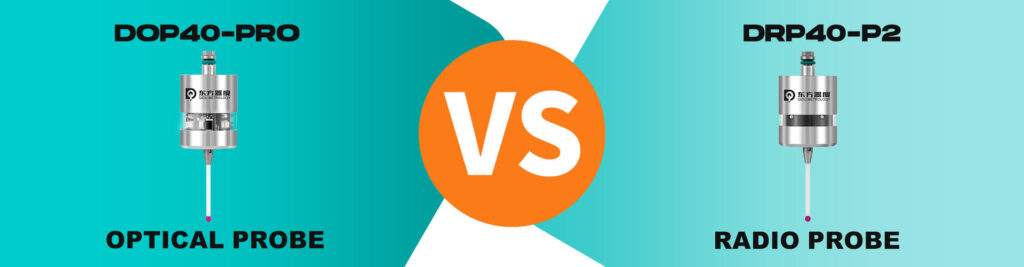
Understanding Optical Probes and Their Role in Shops
What Are Optical Probes and How Do They Work?
Optical probes communicate using light. Most systems rely on infrared or laser-based transmission. A transmitter sends a focused beam, and a receiver captures it. If the beam reaches the receiver cleanly, the signal is read correctly.
Because of this setup, optical probes usually need a clear line of sight. That might sound restrictive, but in controlled areas it actually works well. Many shops use optical probes in fixed stations where the sensor and receiver stay aligned. Once installed, the communication is straightforward and predictable.
You will often see optical probes used in compact measuring areas, enclosed systems, or applications where movement is limited. In these cases, the simplicity of light-based communication becomes an advantage rather than a limitation.
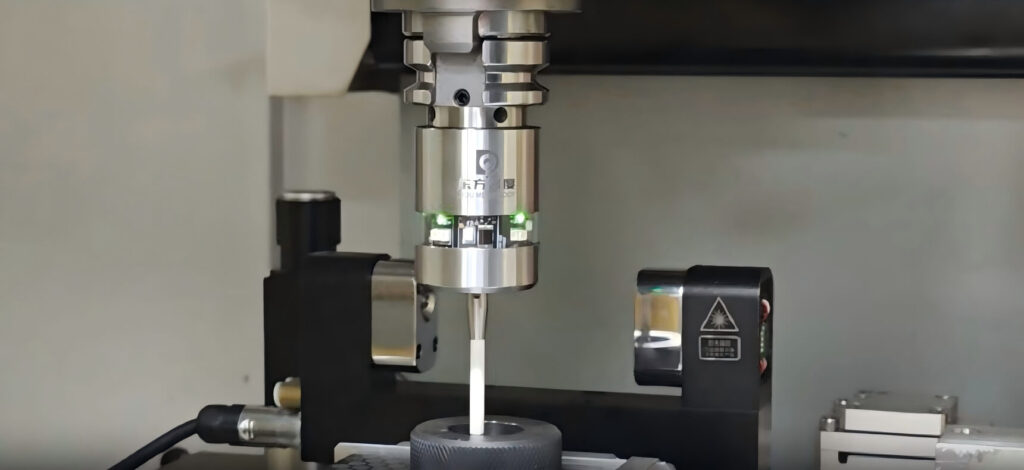
Advantages of Optical Probes for Signal Reliability
One reason shops choose optical probes is stability. Since they do not rely on radio frequency, they are not affected by Wi-Fi routers, Bluetooth scanners, or other wireless devices. In environments filled with electronics, that can make a noticeable difference.
Another benefit is consistency. When an optical probe is properly aligned, the signal does not fluctuate much. There are no channels to manage and no frequency conflicts. The communication either works or it doesn’t, which makes troubleshooting easier.
This type of reliability is useful in areas where readings must remain repeatable. Shops that prioritize precision often appreciate how predictable optical communication can be.
Challenges of Optical Probes in Retail Settings
However, optical probes are not ideal everywhere. The biggest limitation is visibility. If something blocks the beam — a shelf, a moving cart, or even a person — the signal can drop. In a quiet environment this rarely happens, but in busy shops it becomes a factor.
Dust and lighting conditions can also play a role. Strong ambient light or reflective surfaces may reduce signal clarity. Modern systems handle this better than older designs, but installation still matters.
Distance is another consideration. Optical probes typically perform best over shorter ranges. Extending coverage means adding more receivers or adjusting layout, which may not always be practical in larger spaces.
Exploring Radio Probes and Their Functionality in Shops
What Are Radio Probes and Their Mechanism?
Radio probes use RF signals to communicate. Instead of requiring direct visibility, they transmit through the air and can pass around obstacles. Once paired, the probe and receiver maintain communication within a certain range.
This flexibility is why radio probes are common in larger shops. Devices can move freely without losing connection. Shelves, displays, and equipment rarely block the signal completely.
Radio systems also simplify installation. There is no need to align components precisely. Once configured, communication continues even if equipment is repositioned.
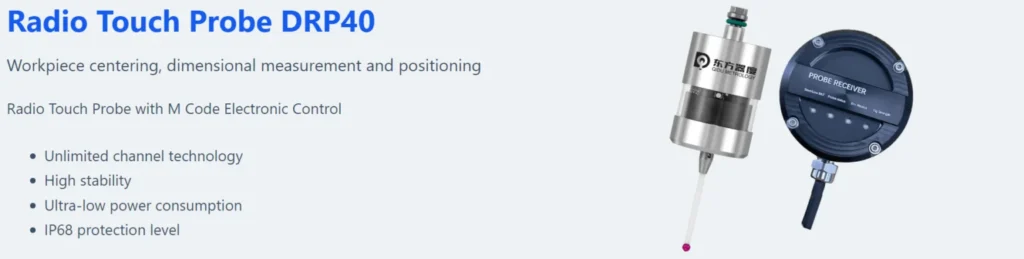
Benefits of Radio Probes for Signal Reliability
The main strength of radio probes is coverage. A single receiver can often handle a wide area, which reduces hardware requirements. This is especially useful in large shops or warehouse-style environments.
Radio probes also handle movement well. Mobile devices, handheld tools, or automated systems can operate without worrying about line-of-sight. This makes them suitable for dynamic workflows.
Another practical advantage is flexibility. If the layout changes, radio probes usually continue working without adjustment. That alone can save time during shop reconfiguration.
Drawbacks of Radio Probes in Shop Environments
Despite their flexibility, radio probes are not immune to signal issues. Interference is the most common concern. Shops often have Wi-Fi networks, wireless scanners, and other RF devices operating simultaneously. When too many signals overlap, reliability may decrease.
Metal structures can also affect performance. Shelving, machinery, and dense product stacks can reflect radio signals. This sometimes leads to inconsistent communication, especially in tightly packed areas.
There is also the question of signal spread. Because radio signals travel beyond the immediate area, they may require additional security measures. While this is manageable, it adds another step to system setup.
Head-to-Head Comparison: Optical Probe vs. Radio Probe Signal Reliability
Signal Strength and Coverage
When coverage matters, radio probes usually have the advantage. They work across larger areas and handle obstacles better. Shops with wide layouts or moving equipment often find them easier to implement.
Optical probes, on the other hand, perform best in defined zones. Within line-of-sight, the signal is extremely stable. Outside that path, communication stops. This makes them better suited for fixed installations.
In practice, smaller shops or enclosed stations often benefit from optical probes, while larger environments tend to favor radio communication.
Interference and Noise
Interference is where optical probes stand out. Because they use light instead of RF, they are unaffected by wireless congestion. Even in electronics-heavy shops, signal stability remains consistent.
Radio probes must share space with other wireless devices. Most of the time this works fine, but reliability can vary depending on how crowded the RF environment becomes. Careful frequency management can help, though it requires planning.
If a shop already has many wireless systems, optical probes may provide more predictable performance. If wireless traffic is limited, radio probes usually operate without issues.
Conclusion
There is no universal winner between optical probes and radio probes. Each technology solves a different problem. Optical probes offer stable, interference-resistant communication in controlled spaces. Radio probes provide wider coverage and flexibility in larger or more dynamic environments.
The best choice depends on how the shop operates. If equipment stays fixed and signal consistency is the top priority, optical probes often perform well. If movement, distance, and layout changes are more important, radio probes usually deliver better reliability.
Taking the time to match the probe type to the shop layout will prevent many signal issues later. In most cases, reliability improves not because one technology is better, but because it fits the environment more naturally. Contact with Qidu Metrology team if you need more detailed information or solutions.
