
Table of Contents
In modern machining, the difference between a profitable job and a costly one often comes down to a few microns, a few seconds, or one bad setup. That is exactly why choosing the right CNC probe for Fanuc system is no longer a nice upgrade. It is a practical decision that affects accuracy, cycle time, scrap rate, and operator workload.
For shops running Fanuc-controlled machines, the probe is not just a measurement accessory. It is part of the production system. A well-matched probe helps confirm part position, detect offsets, verify dimensions, reduce manual inspection, and keep the machine cutting instead of waiting. A poor match does the opposite: unstable signals, awkward setup, slow probing cycles, and repeated alarms that waste time on the shop floor.
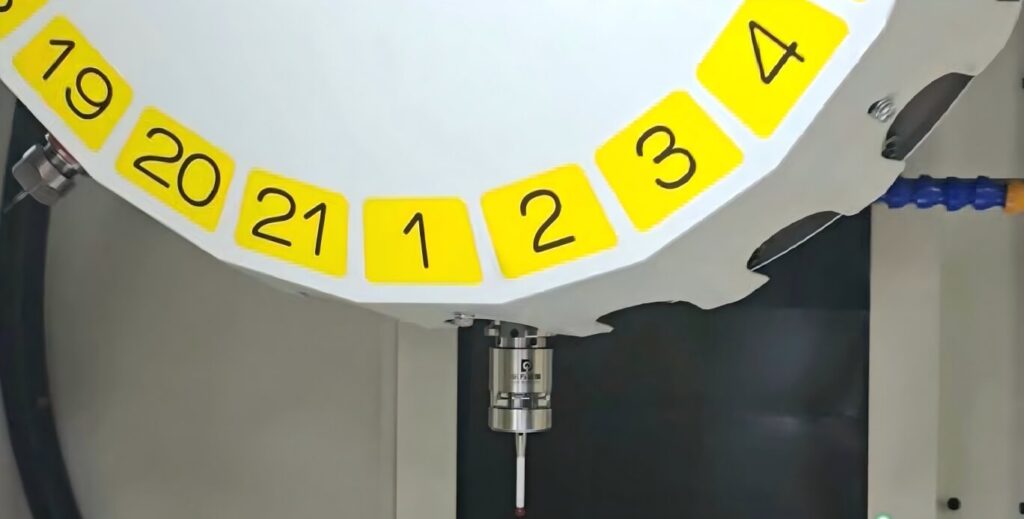
What a CNC Probe for Fanuc Really Does in Daily Production
A CNC probe for Fanuc is used to measure, locate, and verify inside the machine. In real production, that usually means checking workpiece position before cutting, confirming dimensions after machining, and supporting automated offsets and compensation.
For many shops, the biggest value is not “measurement” in the abstract. It is prevention. A CNC probe helps catch a shifted part before the tool ruins a batch. It helps reduce manual gauging between operations. It also makes changeovers faster because the machine can identify the workpiece position more reliably.
In Fanuc environments, this matters even more because many users run mixed production: short runs, frequent setup changes, different operators, and tight delivery schedules. A CNC probe that works smoothly with the control helps stabilize all of that.
Why High-Precision Probing Improves Fanuc Machining Accuracy
A high-precision CNC probe for Fanuc improves accuracy in a very direct way: it reduces uncertainty before machining begins.
Imagine a part that is clamped slightly off-center. If the machine starts cutting based on a guessed zero point, the error moves through the whole job. But if the probe checks the actual position before machining, the control can adjust offsets and keep the process aligned.
That is why accurate probing helps with more than just measurement. It supports:
the first setup of a new part, repeat jobs across different shifts, in-process verification after roughing, and final inspection inside the machine.
The real advantage is consistency. When your probe performs reliably, the machine behaves more like a controlled process and less like a series of manual corrections.
What to Check Before Choosing a CNC Probe for Fanuc
1. Fanuc Compatibility Must Be Confirmed First
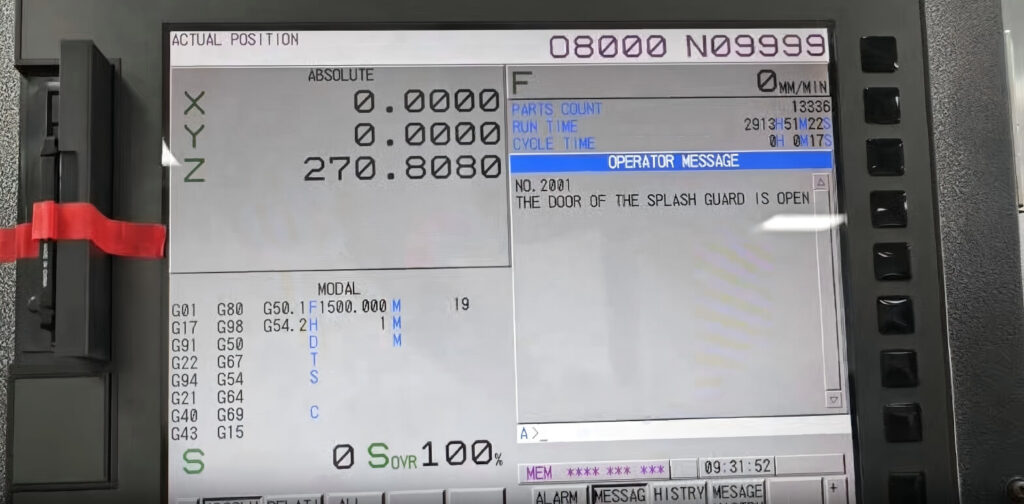
This is the first filter, not the last one. A probe may look precise on paper, but if it does not integrate cleanly with your Fanuc controller workflow, it becomes a constant source of trouble.
Look for a probe that supports your actual setup, not just “Fanuc” in general. Different machines, macros, and software habits can change the result. The probe should connect smoothly with your process for offset setting, inspection cycles, and signal handling.
In practice, compatibility means fewer alarms, fewer custom workarounds, and less time spent convincing the machine to behave.
2. Accuracy Should Match the Tolerance You Actually Sell
Many buyers over-focus on theoretical accuracy and under-focus on real production tolerance. The better question is: what tolerance do your parts require, and how much variation can your process tolerate before quality suffers?
If your work involves high-precision components, mold parts, aerospace features, or repeated tool compensation, you need a probe that delivers stable, repeatable results every day, not just in a demo video.
A good CNC probe for Fanuc should help keep measurement variation low enough that operators trust the result. Once confidence drops, people start double-checking manually, and the whole benefit disappears.
3. Durability Matters More Than Catalog Claims
A probe in the shop does not live in a clean lab. It lives near coolant mist, chips, vibration, spindle motion, accidental bumps, and long hours.
That is why build quality matters. A weak housing, fragile signal behavior, or inconsistent trigger response will cost more than the purchase price over time. The best probe is not always the most expensive one. It is the one that keeps working after repeated use in a real production environment.
For busy Fanuc users, durability is not a luxury. It is the difference between a useful tool and a maintenance problem.
4. Fast Response Helps Reduce Cycle Time
High-frequency response is one of those features people often read about but do not connect to production results. In reality, a faster probe can reduce cycle time, especially when the machine is probing multiple points per part or handling many short jobs.
Why does this matter? Because when probing is slow, operators feel tempted to skip steps. They may reduce inspection frequency or simplify the process. That can increase risk.
A probe with a responsive signal makes the machine feel more efficient. It supports quicker measurement routines, cleaner automation, and better throughput.
5. Easy Installation Saves Real Labor
A probe that takes too long to install or calibrate creates hidden cost. Shops lose time during setup, and operators may avoid using it unless absolutely necessary.
The right CNC probe for Fanuc should be practical to mount, simple to align, and straightforward to maintain. If a probe is easy to use, it gets used more often. That is where the return on investment really comes from.
The Main Types of CNC Probes for Fanuc Users
Touch Probes: The Most Practical Choice for Most Shops
For many Fanuc machines, touch probes are still the most useful and balanced option. They are widely used for part setup, alignment, edge finding, in-machine inspection, and offset compensation.
The strength of a touch probe is straightforwardness. Operators understand it quickly. Programming is usually familiar. The workflow is predictable.
For shops that want stable day-to-day results without unnecessary complexity, a touch probe is often the best starting point.
Wireless Probes: More Flexible on the Shop Floor
Wireless probes are popular because they reduce cable-related limitations and support greater flexibility in the machine workspace. In environments where setup changes often, that convenience can matter a lot.
The key advantage is freedom. Operators can work with fewer physical constraints, which can make the entire process smoother. The main requirement is dependable signal stability and a system that integrates cleanly with the machine.
Why Qidu Metrology and the DOP40-PRO Deserve Attention
Qidu Metrology focuses on machine measurement products built for real industrial use, including touch probes, tool setters, and tool setting arms. For Fanuc users, that matters because the everyday pain points are usually not “missing theory.” They are setup delay, unstable measurement routines, inconsistent zeroing, and slow adaptation on the shop floor.
That is where the optical probe DOP40-PRO stands out as a practical option for Fanuc applications. Instead of trying to be everything for everyone, it is the kind of product many shops look for when they want a probe that helps make daily work easier: smoother setup, more dependable measurement routines, and fewer interruptions during production.
For Fanuc users dealing with frequent job changes, the value is obvious. A probe like the DOP40-PRO can help reduce manual adjustment, support more consistent first-part verification, and improve confidence when switching between operators or shifts. For shops that want to move from “checking everything by hand” toward a more controlled in-machine process, that kind of support is exactly what matters.
Qidu Metrology’s broader product range also helps users build a more complete measurement workflow. A CNC probe is powerful on its own, but when it works together with the right tool setter and tool-setting accessories, the whole machining process becomes more efficient and more reliable.
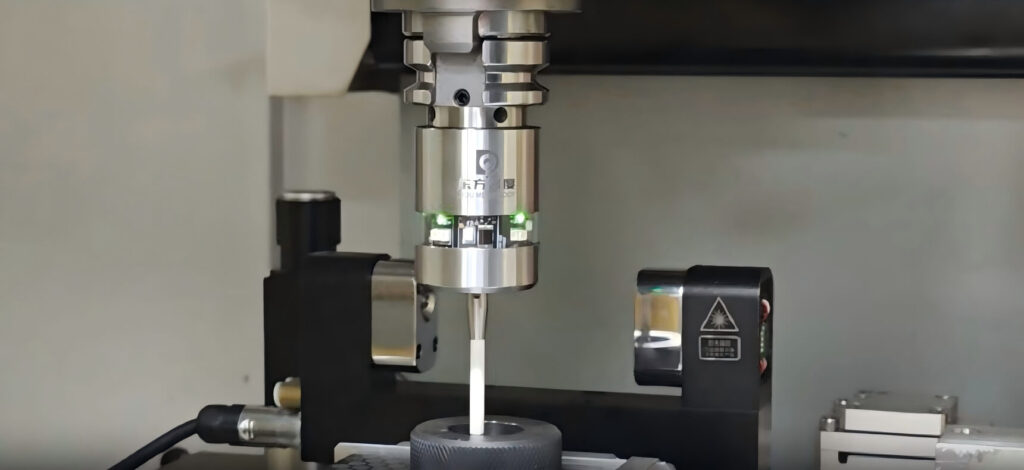
How to Get Better Results from Any Fanuc CNC Probe
Calibrate More Often Than You Think You Need To
A probe that is not calibrated properly is not giving you real confidence. Many shops wait too long between calibration checks, then wonder why offsets drift or results become inconsistent.
A good rule is simple: calibrate after installation, after a collision or strong shock, after major setup changes, and on a routine schedule that fits the production load. High-use machines need more attention than occasional machines.
Link Probe Data to the Control Properly
A probe is only as useful as the process built around it. If data is not transferred cleanly into the Fanuc workflow, then the machine still depends on manual interpretation.
The best results come when the probe supports automated routines for offsets, dimensional checks, and compensation. That reduces human error and makes the machine more self-sufficient.
Train Operators on the Failure Signs
Many probing problems are not caused by the hardware itself. They come from missed signals, poor cleaning, incorrect setup, or inconsistent usage.
Operators should know the warning signs: repeated false triggers, unstable readings, sudden calibration drift, or inspection results that change without explanation. Catching those signs early prevents expensive mistakes.
Common Fanuc Probe Problems and the Practical Fix
If your shop uses Fanuc machines, these are the problems most often seen in the real world:
The probe gives inconsistent readings after setup changes. The machine loses time because probing cycles are too slow. Operators do not trust the result and remeasure manually. The probe is hard to install or annoying to maintain. The system works in one machine but not smoothly across the whole shop.
The fix is usually not “more theory.” It is selecting a probe that fits the control, the process, and the production style. That is why a practical product such as the Qidu Metrology DOP40-PRO can be a smart option for many Fanuc users. The goal is not just to own a probe. The goal is to make the machine easier to run and the process easier to trust.
Conclusion
Choosing the right CNC probe for Fanuc is really about choosing fewer problems. The best probe is the one that fits your controller, matches your tolerance requirements, survives the shop environment, and helps operators work faster with less uncertainty.
If your current setup still relies too heavily on manual checking, constant recalibration, or repeated adjustment, it may be time to upgrade to a more practical probing solution. For many Fanuc users, Qidu Metrology’s DOP40-PRO offers a strong path toward more stable measurement, smoother setup, and better daily productivity.
Precision is not only about tighter numbers. It is about building a process that stays accurate when real production begins.
